History of Riverside
 Founded in 1870 by John North and a group of Easterners who wished to establish a colony dedicated to furthering education and culture, Riverside was built on land that was once a Spanish rancho. Investors from England and Canada transplanted traditions and activities adopted by prosperous citizens: the first golf course and polo field in Southern California were built in Riverside.
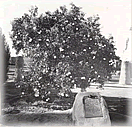
The first orange trees were planted in 1871, but the citrus industry in Riverside began two years later when Eliza Tibbets received two Brazilian navel orange trees sent to her by a friend at the Department of Agriculture in Washington. The trees thrived in the Southern California climate and the navel orange industry grew rapidly.
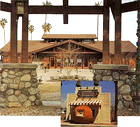 Within a few years, the successful cultivation of the newly discovered navel orange led to a California Gold Rush of a different kind: the establishment of the citrus industry, which is commemorated in the landscapes and exhibits of the California Citrus State Historic Park and the restored packing houses in the Downtown's Marketplace district. By 1882, there were more more than half a million citrus trees in California, almost half of which were in Riverside. The development of refrigerated railroad cars and innovative irrigation systems established Riverside as the wealthiest city per capita by 1895.
As the city prospered, a small guest hotel designed in the popular Mission Revival style grew to become the world famous Mission Inn, favored by presidents, royalty and movie stars. Postcards of lush orange groves, swimming pools. and magnificent homes have attracted vacationers and entrepreneurs throughout the years. Many relocated to the warm, dry climate for reasons of health and to escape Eastern winters. Victoria Avenue with its landmark homes serves as a reminder of European investors who settled here.
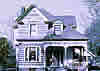
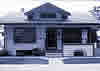
Riverside's citizens are proud of the city's unique character born from a tradition of careful planning, from its carefully laid out historic Mile Square to its 1924 Civic Center designed by the same planner responsible for San Francisco's, Charles Cheney. Through the City's Office of Historic Preservation, it is committed to preserving the past as a firm foundation for the future. Over 100 City Landmarks, 20 National Register Sites and 2 National Landmarks have been designated by the City Council, all offering enjoyment and education to city residents and visitors.
Riverside is fortunate to have a wealth of sites and buildings that provide a link to the city's past and a strong sense of place. This is the result of the hard work and careful planning of the city's Historic Preservation Program. Created by the City Council in 1969, it identifies and advances the preservation of Riverside's historic neighborhoods, and civic and commercial resources.
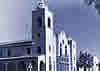
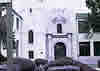
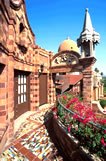 Examples include the Mission Inn, the Chinatown site, the National Packing House, Citrus Experiment Station and engineering feats like the Gage Canal. Many of these landmarks are found in the Downtown's Mission Inn Historic District. California's Mission Revival style, born in Riverside, can be seen throughout the City, most notably in the Mission Inn, the Municipal Auditorium, First Church of Christ Scientist, and the Fox Theater, home of the Riverside Film Festival.
The Mission Inn was developed from the Glenwood Tavern, owned by Captain Christopher Columbus Miller, who moved to Riverside in 1874 to survey land for the Gage Canal, which brought water to Riverside. His son Frank developed a lasting interest in culture and the arts and took over the expansion of the Inn. Over the years he embellished and expanded it into a unique resort known all over the world. It has played host to numerous movie stars, musicians and heads of state. Ronald and Nancy Reagan honeymooned there, and Richard and Pat Nixon were married on its grounds. Teddy Roosevelt planted a tree in its courtyard, and a special chair, built for President William Howard Taft when he visited, is still in the Inn's collection.
Many of Riverside's historic buildings are open to the public including the Catherine Bettner home, restored and renamed the Heritage House, which is open for tours. The Riverside Art Museum was designed by America's most successful woman architect, Julia Morgan, famous for William Randolph Hearst's Castle in San Simeon. It was originally constructed for the YWCA on land donated by Frank Miller. Benedict Castle was built as a private residence by Henry Jekel and is now occupied by Teen Challenge. It is available for special events and filming as are many of Riverside's historic homes and neighborhoods.
 |
 |
 |
 |
 |
 |
 |
About the Raincross Symbol
The unique City Raincross Symbol is derived from combining a replica of the mass bell used by Father Junipero Serra, missionary priest and founder of the California Missions, and the cross to which the Navajo and Central American Indians prayed for rain. Called the "Raincross" symbol, it was designed for the Mission Inn and given to the city by Frank Miller. The Raincross symbol has been identified with Riverside since 1907. Variations of the symbol are used extensively throughout Riverside in architecture, street signs and lighting standards, and is used on the City flag.
Playing on the nostalgia for the state's Spanish heritage and the romanticized images of the missions and the Indians portrayed by Helen Hunt Jackson in her novels, Miller, Matthew Gage, the Sunkist Cooperative, the Santa Fe Railroad and other city boosters worked together to market Riverside as a Spanish Mediterranean Mecca. Riverside's climate and landscapes continue to evoke this Mediterranean paradise. There is a strong community support for historic preservation for a city that reveres its past and has built on that firm foundation.