Museum of Riverside

Harada House
Harada House Long Range Conservation Plan/Historic Structure
Report
Governor Newsom Issues Proclamation Declaring A Day of Remembrance: Japanese American Evacuation
Donate Now
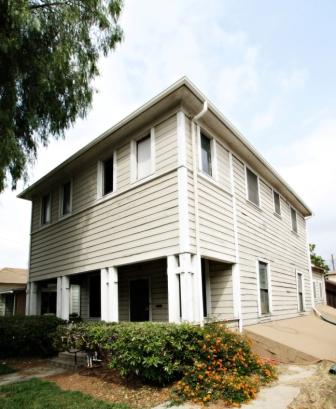
The National Historic Landmark Harada House is a powerful civil rights landmark in California.
This site and the story of the Harada Family embody local, state, national, and international issues of civil and individual rights, democracy, immigration, assimilation, and citizenship.
Preservation of the site, collections, and stories ensures that these pivotal lessons of history will continue to be accessible for all peoples. Jukichi Harada, his wife Ken, and their first son Masa Atsu, settled in Riverside, California, in 1905. They soon were operating a rooming house and the Washington Restaurant. Following the death of his first American born son, Jukichi sought a home with healthier conditions for his family. Aware of the 1913 California Alien Land Law prohibiting aliens from owning property, in December 1915 he purchased the house at 3356 Lemon Street in the names of his three American-born children, Mine, Sumi, and Yoshizo.
In 1918, Jukichi Harada prevailed in a landmark court battle to retain the home.
https://youtu.be/OBhsk31VuhU
Alien Land Law
https://youtu.be/qI5B18QRabY
Fractured Story of Citizenship
https://youtu.be/gz5dCJyx7FM
Centenary Day
https://youtu.be/2qTlHE9JBJk
Harada House: Not Just History
https://youtu.be/ZalwE54XTeU
https://youtu.be/SN2G-o1Lg2E
Miné Okubo
https://youtu.be/ScWbcEySPcY
Outside Harada House
https://youtu.be/3jyWIXBjdVo
Harada House: A Family's Story
https://youtu.be/CSD0D0ZxUaw
Women's Citizenship
https://youtu.be/EgYOAldOyRU
"If Only We Dare": From the Harada
Story to Ending Asian Hate
https://youtu.be/Ovuz4ls0lFM
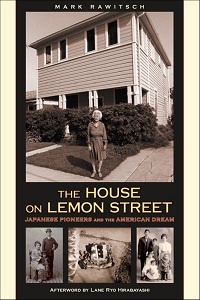 The House on Lemon Street: Japanese Pioneers and the American Dream by Mark Rawitsch
Afterword by Lane Ryo Hirabayashi.
Published by the University of Colorado Press. The book is
inaugural winner of the Crader Family Book Prize in American Values, 2013"Drawing from an excellent selection of primary and secondary sources, Rawitsch recounts Harada's immigration to the U.S., the subsequent growth of his family, and the family's experiences before, during, and after the evacuation and internment. However, the true value of the book lies in Rawitsch's meticulous research into the legal battle Harada faced over his attempt to purchase a proper home for his children, and his family's struggle for civil rights and acceptance in the town of Riverside." —J. T. Rasel, Choice
Mark Rawitsch was Dean of Instruction at Mendocino College and is a founding member of the Harada House National Historic Landmark Ad-Hoc Advisory Council of the City of Riverside, now the Harada House Project Team. http://www.upcolorado.com/book/_welcome/The_House_on_Lemon_Street The book is available in the Museum's Heritage House Gift Shop.
| Click the thumbnail images below to enlarge. | |
 |
Jukichi, Ken, and Masa Atsu Harada, circa 1905 |
 |
Jukichi, Masa Atsu, Mine, and the staff and patrons of the Washington Restaurant on University Avenue |
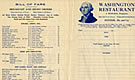 |
Menu for the Washington Restaurant |
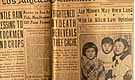 |
Jukichi puts the title of the family house in his American-born children's names |
| (Museum of Riverside, Harada Family Archives) | |